
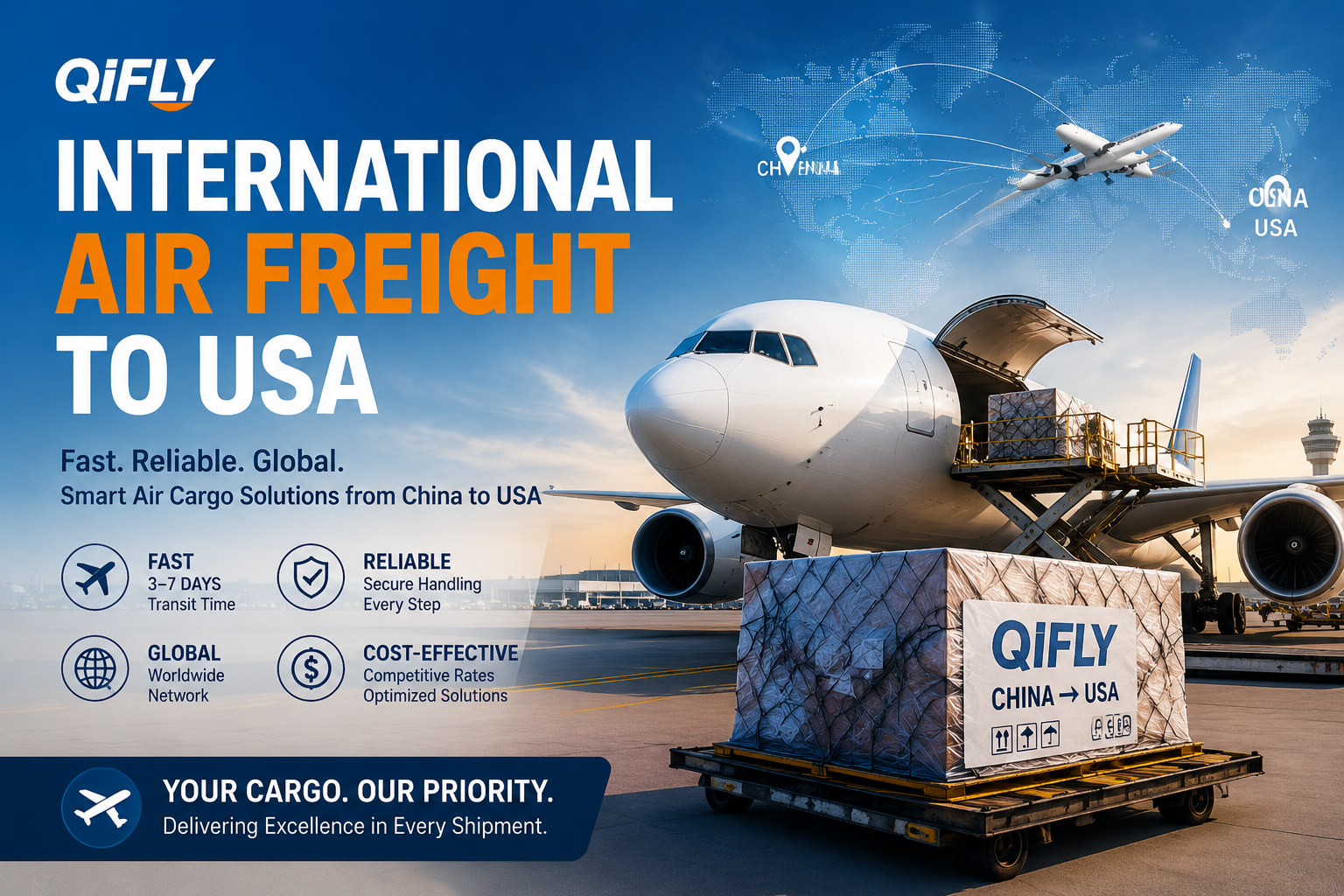
Most people think international shipping is simple: book a carrier, send cargo, wait for delivery.
But international air freight to USA is actually a coordinated system of timing, documentation, customs, and routing decisions happening behind the scenes.
If you are importing from China, understanding how air freight really works can help you reduce delays, avoid unnecessary costs, and choose the right logistics strategy instead of guessing.
This guide breaks down air freight in a practical, real-world way so you know exactly what happens to your cargo after it leaves China.
What International Air Freight to USA Really Means
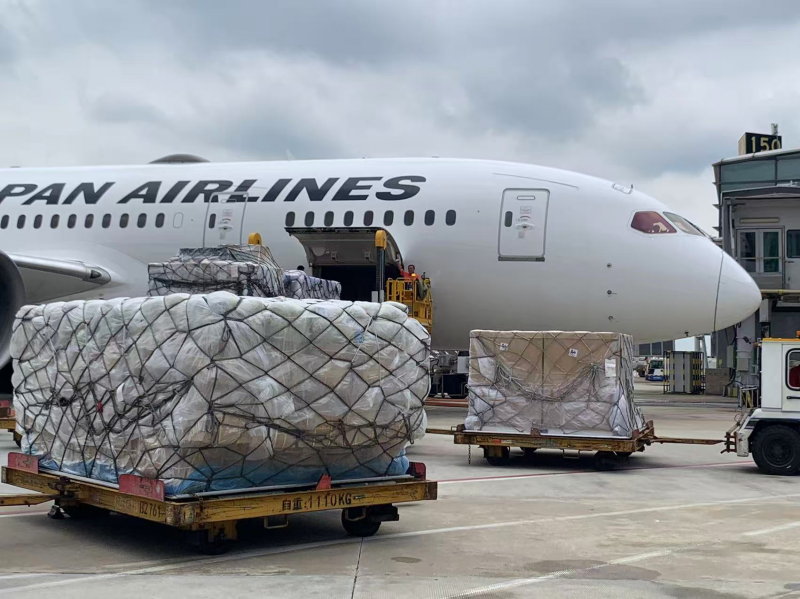
International air freight to USA refers to transporting goods from China to American airports using commercial or cargo aircraft, followed by customs clearance and final delivery.
But in reality, it is not just “airport to airport shipping.”
It is a chain that includes:
- Cargo pickup in China
- Export documentation and customs clearance
- Airline booking and cargo consolidation
- Air transport across continents
- Import clearance in the USA
- Final delivery to warehouse or door
Each step can affect speed, cost, and reliability.
QIFLY manages this entire process as an integrated logistics flow instead of fragmented services.
When Air Freight to USA Makes Sense
Air freight is not always the cheapest option, but it is often the most strategic one.
You should choose air freight if:
- You need fast restocking for eCommerce or Amazon FBA
- Your product has high value per kilogram
- You are shipping seasonal or time-sensitive goods
- You cannot afford long inventory delays
Typical business scenarios:
- A seller running low on fast-moving inventory
- A manufacturer fulfilling urgent US orders
- A startup testing product demand before scaling
Air freight is essentially a “time investment saver” rather than a cost-saving method.
The Real Cost of International Air Freight to USA
One of the biggest misconceptions is that air freight has a fixed price.
In reality, pricing depends on multiple variables:
- Chargeable weight (not just actual weight)
- Route and airline selection
- Cargo type and packaging volume
- Seasonal demand fluctuations
- Fuel surcharges and security fees
Key insight:
Air freight is priced for efficiency per kilogram of time saved, not just transportation.
That is why two identical shipments can have very different costs depending on timing and routing decisions.
A Real Shipment Journey: What Air Freight from China to USA Looks Like
Instead of thinking of air freight as a checklist, imagine it as a moving system where your cargo transitions through multiple control points.
A typical shipment does not move in isolation—it passes through a coordinated logistics chain.
Stage 1: Pickup from supplier
Your goods leave the factory and enter a controlled logistics flow. At this stage, packaging quality already affects shipping efficiency later.
Stage 2: Pre-shipment inspection and documentation
Before anything flies, documents and cargo data must align perfectly with airline and customs requirements. Even small mismatches can cause delays.
Stage 3: Capacity allocation (not just “booking a flight”)
Air freight space is dynamically allocated. Your cargo is matched with available airline capacity based on urgency, weight, and route optimization.
Stage 4: Cross-border flight movement
Cargo is consolidated and flown through major international air hubs before entering the US logistics system.
Stage 5: Customs review and release
At this stage, accuracy matters more than speed. Correct classification determines whether your shipment moves immediately or gets held for inspection.
Stage 6: Last-mile delivery integration
Once cleared, goods are routed into domestic US delivery networks for warehouse or FBA fulfillment.
In reality, air freight is not “one transport method”—it is a synchronized chain of decisions happening behind the scenes.
How Businesses Actually Decide Between Air and Ocean Freight
Most importers don’t choose shipping methods based on theory—they choose based on pressure.
- inventory pressure
- cash flow cycles
- customer demand speed
- product value per unit time
Instead of comparing “fast vs slow,” experienced importers think in terms of:
“What happens if my stock arrives 10 days later?”
Decision logic in real operations
Air freight becomes the logical choice when:
- Sales velocity is high
- Stockout risk is expensive
- Product life cycle is short
Ocean freight becomes dominant when:
- Volume is stable
- Forecasting is predictable
- Cost efficiency is priority
Most mature importers don’t switch—they combine.
Hybrid logistics model (real market practice)
A growing number of businesses now use a layered strategy:
- Air freight → emergency replenishment
- Ocean freight → baseline inventory flow
This reduces both risk and logistics cost volatility.
QIFLY supports this dual-path structure by aligning different transport modes under one coordination system.
Why Air Freight Mistakes Usually Come from Planning, Not Shipping
In most failed shipments, the problem is not transport—it is expectation mismatch.
Common operational gaps:
1. Weight misunderstanding
Air freight pricing is based on volumetric weight, not just physical weight. Many importers underestimate this difference.
2. Timing misalignment
Booking too close to production completion often forces expensive last-minute routing.
3. Fragmented shipments
Multiple small shipments increase handling cost and reduce efficiency.
4. Documentation inconsistency
Even minor mismatches between invoice and packing list can trigger customs delays.
How Modern Logistics Systems Improve Air Freight Efficiency
Today’s international air freight to USA is no longer just carrier-based—it is system-based.
Modern logistics providers focus on:
- route optimization across multiple airlines
- consolidation of fragmented cargo
- synchronized export documentation flow
- real-time tracking integration
- customs pre-clearance preparation
Instead of treating shipments individually, logistics platforms manage them as a network of moving parts.
QIFLY integrates these processes into a unified workflow so businesses can reduce uncertainty and improve delivery predictability.
Final Takeaway: Air Freight Is a Strategic Tool, Not Just Transport
International air freight to USA is not simply about moving goods quickly.
It is about controlling time, protecting inventory cycles, and maintaining business continuity.
For importers, the key decision is not “Is air freight expensive?”
The real question is:
“What does delayed inventory cost my business?”
When speed protects revenue, air freight becomes a strategic advantage rather than a logistics expense.
And when combined with structured logistics planning, it becomes one of the most powerful tools in global trade.